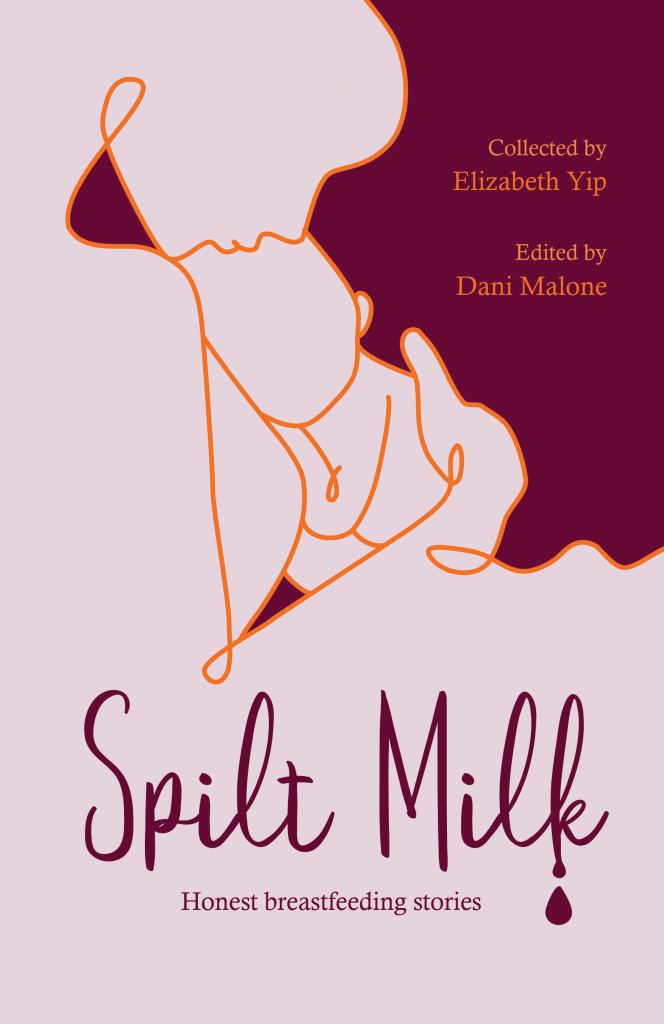
A word from the woman whose lifelong passion for women-and-babies’ healthcare, started the Spilt Milk, Honest Breastfeeding Stories Book. She has dedicated her career to supporting new mothers though the often difficult road of nursing their babies. Indeed, she helped me, some 7 years ago! Liz, thank you, for your work.
Dani (Editor of Spilt Milk Stories)
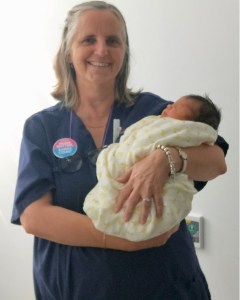
Liz’s own story
This collection of precious stories has been shaped by the inspiring interactions I’ve had with amazing women, over the years. Some enjoyed breastfeeding for long periods, some for short periods, and some chose not to breastfeed at all.
We celebrate the power of birth, but it’s easy to forget the power of women after they have delivered. They listen for and tend to their baby, regardless of fatigue, pain or emotional trauma, while providing for many other needs of the family. Women feel a range of powerful emotions after having a baby: happy, sad, depressed, joyful, anxious, determined, swinging from knowing they are right all the time, to questioning everything they do.
Some of the experiences recollected within this book may cause some women distress. For some mothers, the pressure to stop breastfeeding became too much. So, they stopped before they were ready. There are those who wish they somehow ‘tried harder’, or those who felt forced to breastfeed against their wishes, or despite their baby not thriving. In the not-so-distant past, the image of a ‘good mother’ was one who breastfed. We know now that this is far from the reality. We celebrate and acknowledge mothers from all walks of life, in all the wonderful and varied ways in which they raise their children. We also acknowledge those who choose not to use breastfeeding terminology. This book is also for you, even if we don’t use your language. We acknowledge the women who have lost babies or have struggled to conceive; and those who are non-biological and adoptive mothers, some re-lactating or stimulating lactation for an adoptive or surrogate baby.
Each culture has expectations of men, and much has been written about how the ideal man is supposed to be. But there’s very little about the everyday man, getting on with being a father, grandfather, or brother, trying to love and support his family.
The aim of this book is to share some of the huge range of experiences of breastfeeding mothers. It will not be formula bashing: there is a place for the discussion of the marketing and educational push of formula manufacturers within the healthcare systems of the world. But it must also be acknowledged that many babies would not have made it without breast- milk substitutes. We know that historically, some women who couldn’t breastfeed had the help of a wet nurse (another lactating woman), who provided the nourishment needed for their baby to survive. In recent decades, however, there are many situations where the sharing of breast- milk is very uncommon and access to donor-milk banks is limited.
Many women have difficulty with breastfeeding, but most can produce some breastmilk. In my 40 years of professional practice, I have met women who just couldn’t make enough milk, for a variety of reasons including genetics, prior surgery and trauma. However, I’ve also seen many have their breastfeeding hindered by their babies simply being unable to feed because of restrictive feeding rules that few women and babies could follow successfully. We know little about low supply, due to mammary hypoplasia (also called insufficient glandular tissue) or hormonal issues. Hopefully, the coming years will see more research in these areas.
The healthcare systems of the Western world supported the use of formula for most of the last century as babies were failing to thrive on breastfeeding restriction after rules set in the 1930s limiting feeds to four-hourly, with no feeding overnight. Ideas such as these took hold in baby care books of the time. A difficult tension between this advice and women’s desire to breastfeed in line with their innate knowledge of their own babies and bodies has resulted in women pushing for support to breastfeed.
Nowadays, there are well-known breastfeeding support groups which provide advice and support for breastfeeding parents. However, challenges remain, despite promising new research, because ‘how’ women breastfeed is very difficult to collate.
After a career dedicated to the care of women and babies, I am now getting close to retiring from the paid workforce. Even with my experience, I am still learning. I would like to apologise to the women I didn’t listen to, those I may not have fully understood, or whom I couldn’t help because I may not have had all the skills needed to do so. Like everyone else, I make mistakes. However, I have fought for women (quietly and loudly), to have the birth they wanted wherever possible, to be able to give their babies breastmilk and to breastfeed as they wished.
I will always be interested in what is happening in the world of breast- feeding and I continue to hope it once again becomes our human ‘normal’, in the wonderfully huge range of what ‘normal’ is. I hope that as we look forward, women who need support to breastfeed are given all the help they need, as they journey into their own story. As you’ll see from the accounts, no two women are the same and no two breastfeeding experiences are the same. I thank them all, for sharing the gift of their experience.
A little more about my professional life
I started nursing at a smaller hospital on the edge of the city of Sydney. A perfect place for a country girl. The world looked very different then. I don’t recall seeing anyone in the children’s ward breastfeed. Today, we not only see breastfeeding in children’s wards, but also most adult wards will try to support breastfeeding for women who need their care. Life happens, while we are parenting.
In the early 80s, I studied midwifery at a major maternity hospital. I enjoyed this time very much, although I did raise eyebrows for allowing an obstetrician to do a birth out of a bed! At the time, young obstetrics and gynecology trainees were beginning to realise that making all women deliver on their backs – and often in stirrups – wasn’t always the best idea. There’s much I love about midwifery, not least that we have many inter- esting characters. We chat and share our experiences on night duty and on the long hours of rotating shifts.
Roughly half the women at the hospital were not breastfeeding. Babies were mostly kept in the nursery during this period, but we allowed the mothers to have them in the daytime and might bring them to feed at night. However, usually we encouraged the mother to sleep.
I moved to another city hospital in 1983, to neonatal intensive care. It was here that I met an amazing team of health professionals, who were starting to acknowledge the personal pain for women, when they lost a baby, for any reason. They encouraged mothers to hold their stillbirths or dying babies and to make memories. This was a difficult time for those professionals as many of their colleagues thought that women were better off doing what they were told. This attitude comes from a centuries-old practice of the family, or doctor, making decisions for grieving women – as they did for other health issues. A woman’s family was usually told of a diagnosis – not the woman.
There have been many doctors, midwives and other healthcare professionals in my career who have pushed for positive changes, to support women and to recognise their different needs. I have obtained a paediatric certificate; a mothercraft certificate and I am an IBCLC (international board-certified lactation consultant). The latter, I continue to update, to remain certified.
We are all, in the healthcare industry, continuing to learn and improve upon our knowledge of breastfeeding. I feel very lucky to be able to support women and their babies.
Spilt Milk is available in the following formats:
Paperback delivery, around the world: https://shorturl.at/ilyDY
Kindle: https://shorturl.at/kKRVY
Leave a Reply